Here pictured is a cake walk held in the old gymnasium at Palmersville High School c. 1949.
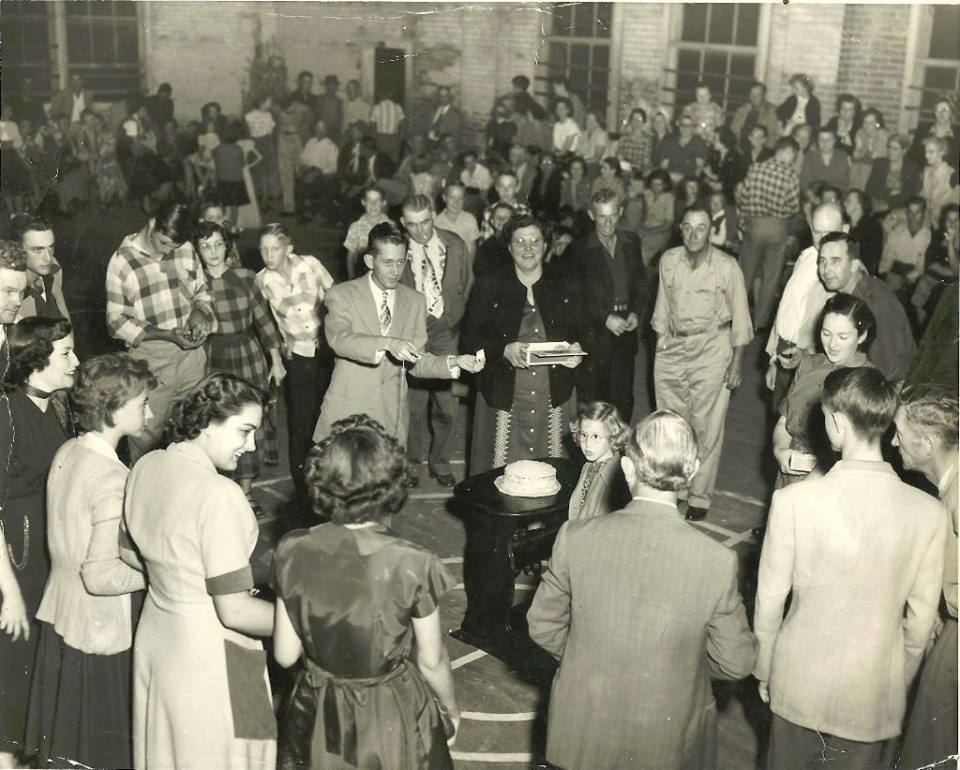
Here pictured is a cake walk held in the old gymnasium at Palmersville High School c. 1949.
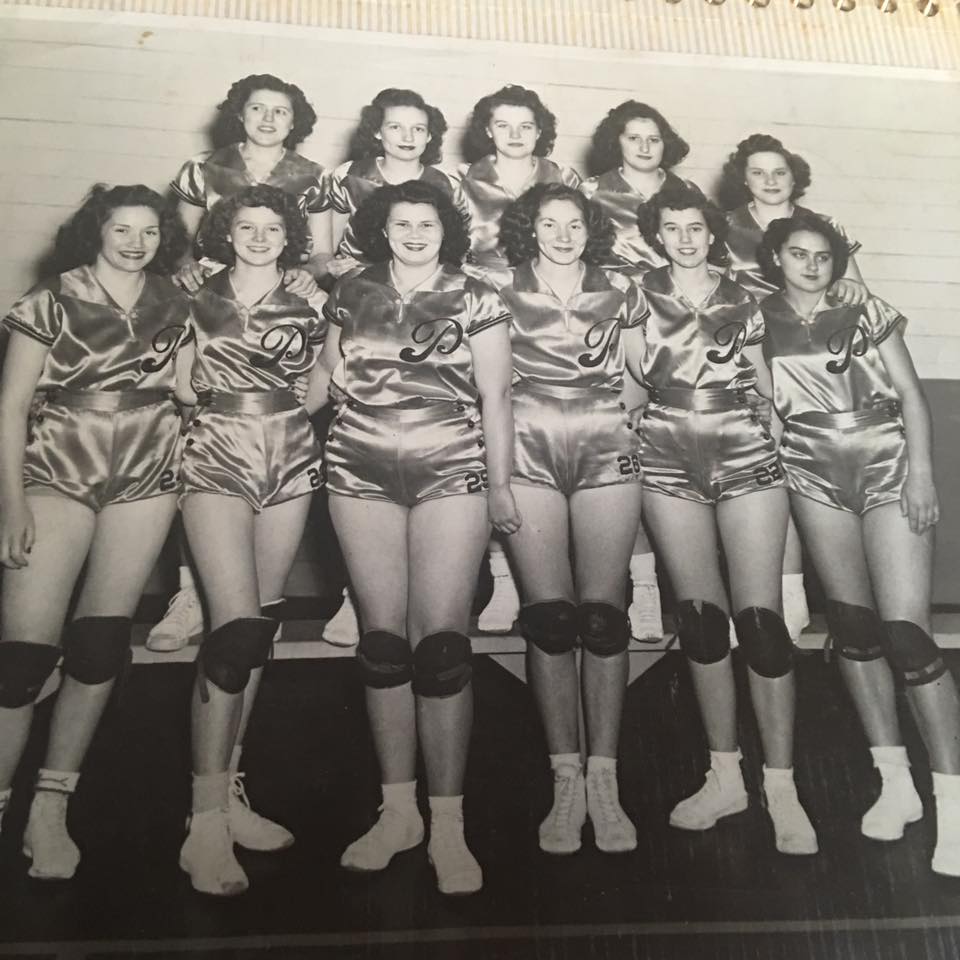
Here pictured is the 1948 Palmersville High School women’s basketball team. Can you help us fill in the names?

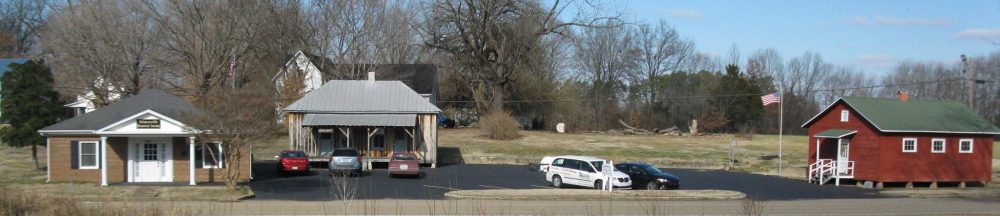
C.1955. The older frame building (on right) was used through the 1980 graduating class. It was replaced by a brick building that was in use until 2003. The brick building on the left is the gymnasium. The school and gym still stand (c. 2016) but are abandoned and in disrepair.
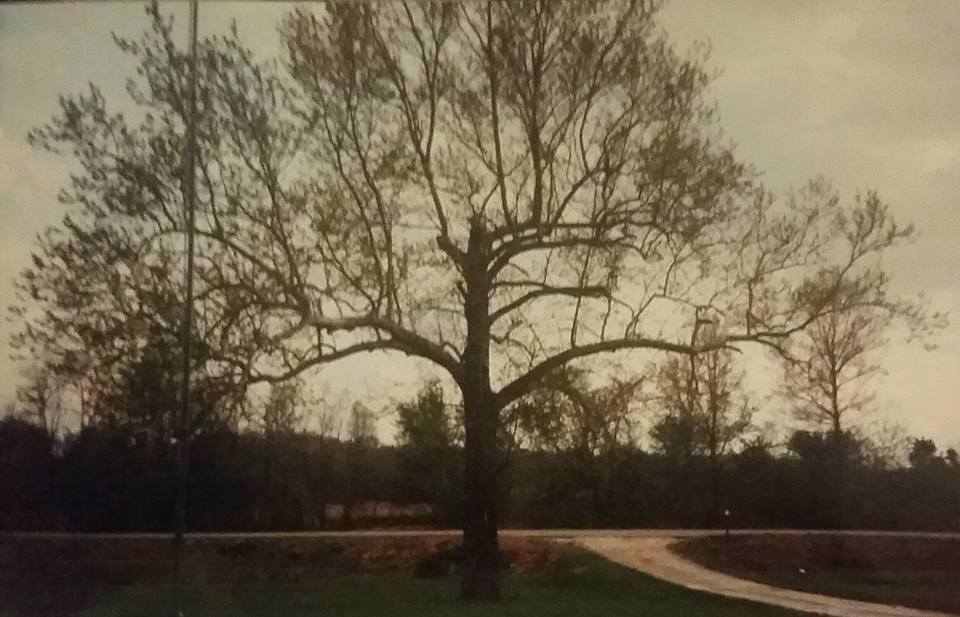
This is a photograph of what was the third largest American Sycamore Tree (Platanus occidentalis) that had ever been documented to have lived in Tennessee.
It was located on highway 190, three miles south of Palmersville, belonging to Harold and Faye Reynolds of Reynoldsville, close to Palmersville. The tree was removed and destroyed by the State of Tennessee for the expansion of a new bridge right of way; it was located about a 100 yards from Little Cane Creek.
It had been measured by the Tennessee Forestry Service about 15 years earlier. As you can tell it was at one time much taller before the top was broken out from a storm. The tree was dying and was believed to have just about lived out it’s age. It had been part of the Reynolds Farm since December of 1941. Its age was never dated. It’s name was “The Old Big Tree”.
Credit to the PalmersvillTN Blog.

We have a first-hand account of a member of the crew! Be sure to read that, too.
On Sunday, September the 5th of 1943, during WWII an Army B-17 Bomber crashed between Palmersville and Latham, Tennessee, resulting in the loss of nine airman’s lives. Seventy three years ago today, the crew, consisting of ten Army airmen, who where flying out of the Dyersburg Army Air Base, close to Halls Tennessee, in route to Gulfport Mississippi, became lost just after takeoff. Fifty miles off course, in the opposite direction that it was first charted. While flying over the northern part of Weakley county, local witnesses stated the plane suddenly exploded midair over the Palmersville and Latham, Obion River bottoms.
Mr. Hugh Brann of Palmersville, who was only twelve years old at the time, said he witnessed the plane explode and fall, while riding his bicycle with friends,west of Palmersville. He said “the plane just seemed to come apart as it flew over them ” and said he could hear it as it fell from the sky, in what he describes, to have been approximately five miles northwest of Palmersville.
According to the Dresden Enterprise, others in the Latham and Palmersville area had also witnessed the plane catch fire and explode and that it had been scattered over a large area between the two towns. And stated some of the wreckage came to rest on, at the time, the Wilkinson, Stowe and Bondurant farms. Also that two men had parachuted from the plane and had survived, but later reports, other than the newspaper, said that one of the two had passed away shortly after being transported back to the air base by Army personnel during the night. [actually, three survived the crash – ed.]
The newspaper also stated, Continue reading
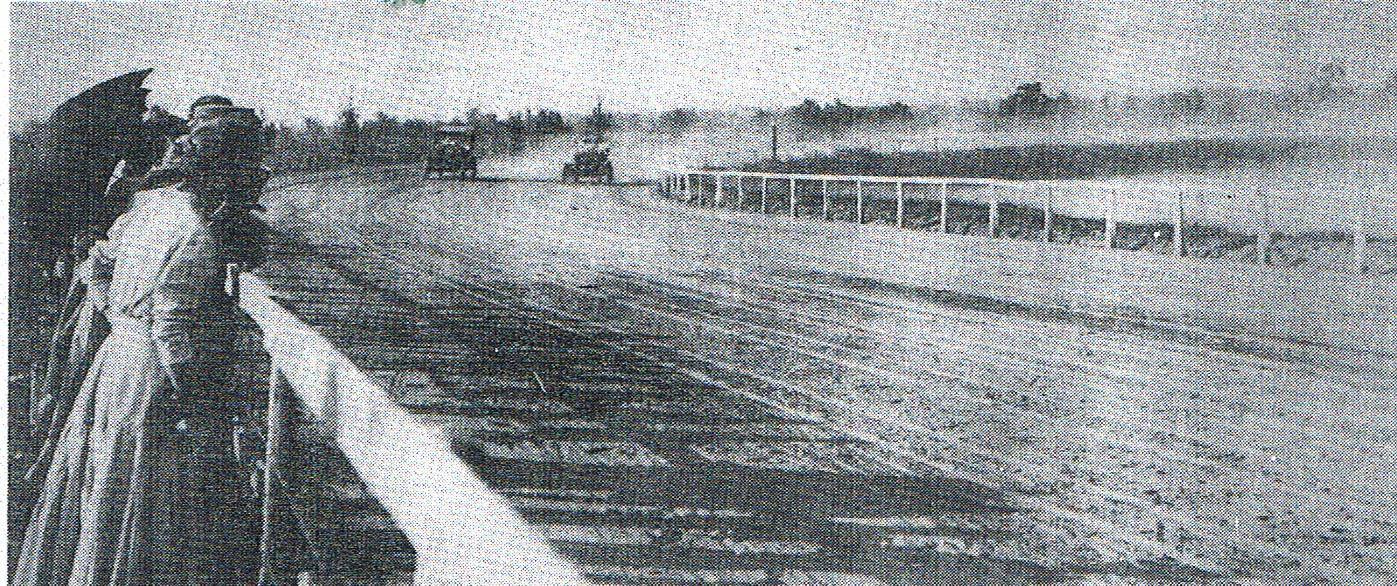
Dresden, Tennessee – early 1900s
Pictured is an automobile race at the Weakley County Fairgrounds in Dresden, Tennessee.
Photograph courtesy the historical collection, Weakley County Remembered, by historians Pansy Nanny Baker and Charlotte Stout Reynolds, archived in the Ned R. McWherter Weakley County Library and Museum.
Credit to The PalmersvilleTN Blog.
YouTube user KitariFox made a drone video of the Palmersville school:
“This is my old school in Palmersville TN. Our class was actually the last to graduate at this school (middle school) due to not having enough people. We had 8 people in my class, and about 98 people in the whole place.”
We’ve recently updated photos of our museums. Enjoy!
First, the Webb School Museum:
The Switchboard Building
The Church and Lodge
by Nelda Rachels (published formerly in Hometown, 2003)
Latham, like many small communities, has moved slightly from its original location in order to serve customers on a rerouted and busier highway. Fortunately, the town’s main business area only had to move a few hundred yards to a rerouted Highway 118.
However, the greater mobility of the populace, the changes from a predominantly agricultural to an industrial economy, and the volume buying and cheaper prices of chain stores have all but killed the economic base of such communities in recent years.
The economic future looked much brighter in the 1850s when E.P. Latham settled in the area north of Dresden. By the early 1900s, according to Virginia Vaughan’s text about about Weakley County’s history, Latham had at least two general stores, one owned by R. L. Stevens and another owned around 1919 by Winstead and Jones. The Winstead and Jones store is said to have “sold everything from coffins to coffee.” The drug store was run by Sam Winstead, who later managed the entire general store after his father had left the business.
During the 1920s Carlos Brundige operated a gristmill, sawmill, and general store. Waterpower ran the gristmill while it served the community on the North Fork of the Obion River, but when the mill moved to Latham, it converted to steam power. In addition there was a blacksmith shop and the early churches of Pisgah Methodist (organized in 1887) and Old Concord Baptist. Later, the Calvary Missionary Baptist Church and the Church of Christ of Bible Union came to the community.
A small school by the name of Bible Union educated many students until 1955, after which it became a community center. It was a long white wooden structure with a row of windows down its length. Unfortunately, this historic building burned during the summer of 1999. This tangible reminder of the community’s past, like much of any town’s history, now remains only in the memories and recollections of its people.
By Nelda Rachels
(This story was first published in 2001 as the award-winning essay in Expressions from Home, a publication of the Weakley County Arts & Humanities Council. The essay had to be a very short 250 words, a very difficult assignment indeed! Ruth Rickman passed away just a few years after this essay was written, perhaps about 2004. Everyone misses her.)
My friend Ruth Rickman, who would soon turn ninety-five, needed someone to stay with her while she recuperated from pneumonia. I felt close to her, but I’d begun work on a book, and too much had already interrupted the writing. What if those two requested nights turned into four, five, or a month of nights? However, I knew the thoughts were selfish ones, so I put them away and stayed. I’m glad I did.
I’m afraid I’m a poor caretaker though. The first night I kept her up too late. She loved to talk about the old days, and since I’m a lover of history, I listened, enrapt. A question, such as, “Do you remember what year electricity came to Palmersville?”, netted the answer “1940” and the story of her young son who had died in ’39, how she had sat at his bedside waving a cardboard fan for days, and how it was too bad electricity hadn’t come a year earlier, when an electric fan could have relieved her feverish son.
She also told me the gruesome tale of a local man who had come to her grandfather’s store to buy fresh meat from a hog killed that frigid morning and how he’d left with the meat in his Model T but never made it home. He and his car drove off a levy and into a swamp. When the community searched and found him stiff and frozen near his car, they took his body to his widow’s house where they stood him in a corner to thaw.
Before I left that first morning—late, since we stayed up till 11:00 p.m. talking—she reached for my hand and pressed it with her own, blackened by the needles and tubes of her recent hospital stay. She thanked me for staying and said she loved me. I hugged her ninety-two pound frame. When she kissed me, I wondered why I had ever thought I was too busy to stay with her. Ruth had taught me the most valuable lesson of all: love is everything; take time to show it, for nothing, nothing else at all really matters.
 Palmersville Historical Society