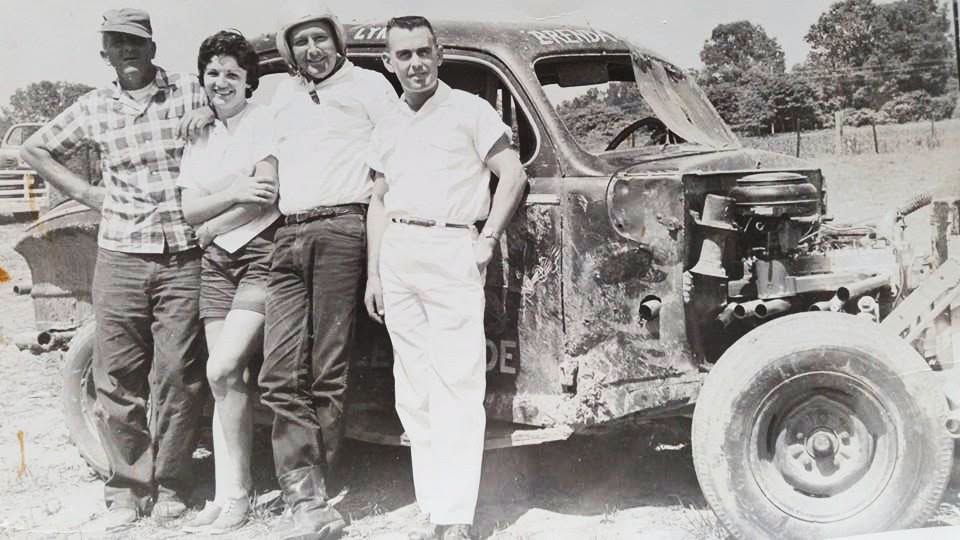
Mayfield, KY c. 1963
Stock car racing in Kentucky — Pictured are (L to R) Palmersville’s Wayne Puckett, Brenda (Puckett) Donoho, Doyle Turberville and Howard Mitchell standing in front Ole Clyde.
Photograph courtesy of Carol Ann (Watkins) Smith.
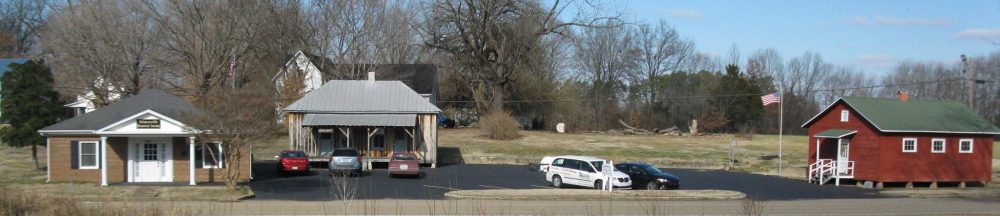
Mayfield, KY c. 1963
Stock car racing in Kentucky — Pictured are (L to R) Palmersville’s Wayne Puckett, Brenda (Puckett) Donoho, Doyle Turberville and Howard Mitchell standing in front Ole Clyde.
Photograph courtesy of Carol Ann (Watkins) Smith.
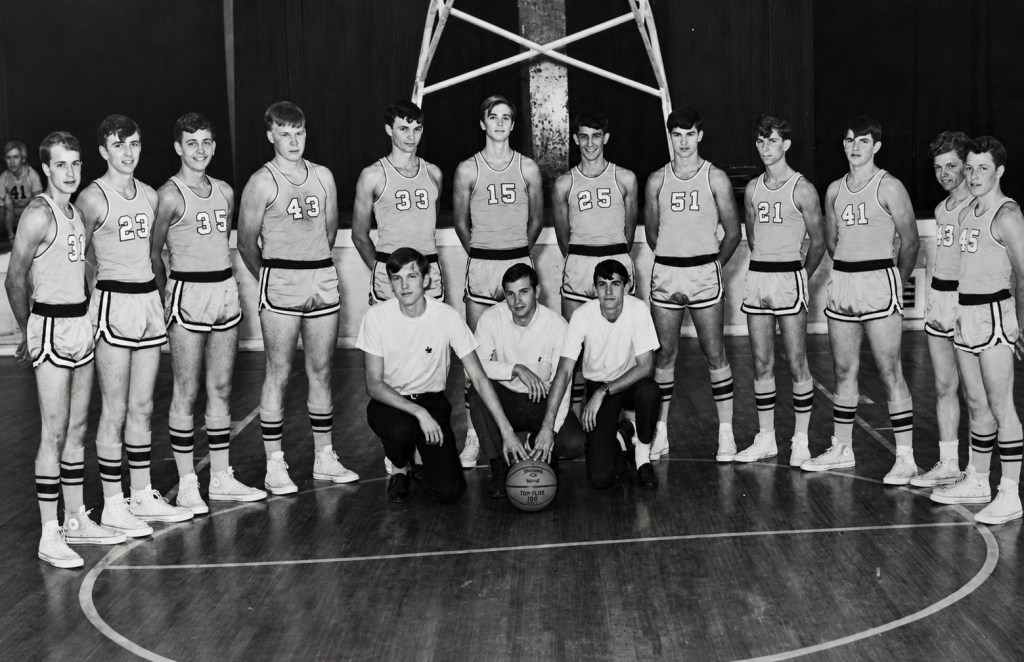
Players listed (left to right):
Many thanks to Robert G Reynolds of Palmersville TN News
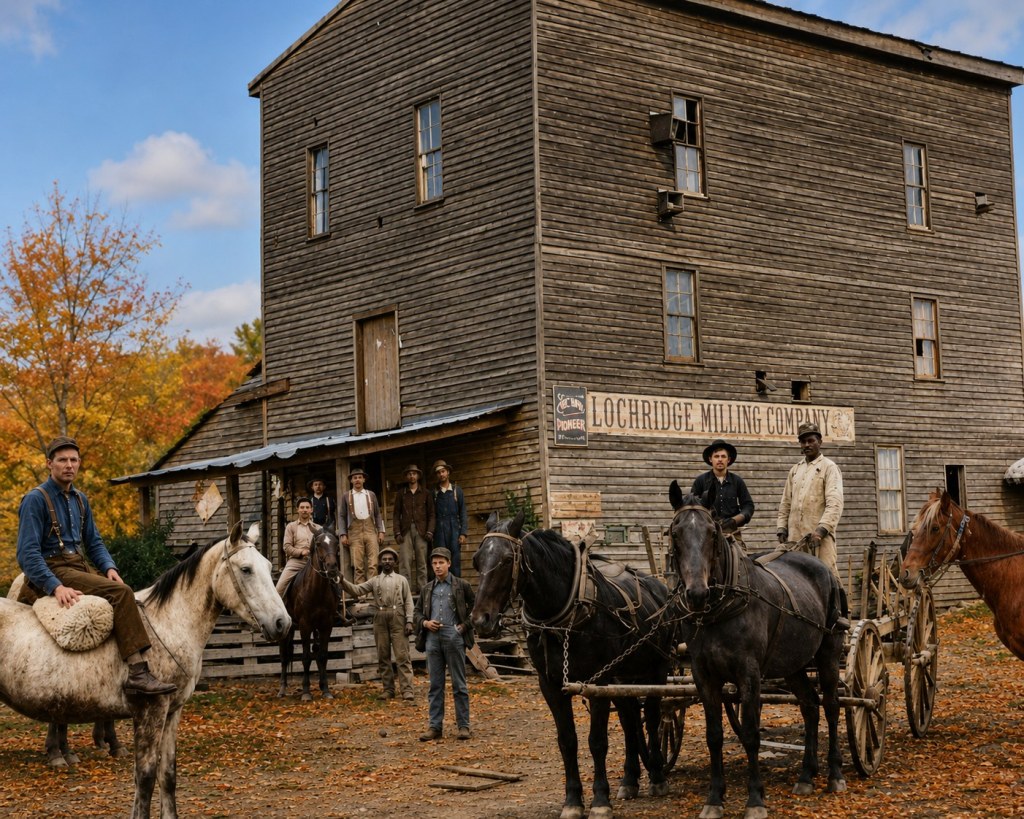
Historic Lochridge Mill Served the Latham–Palmersville Community.
By the closing years of the 1800s, long before paved highways and modern farm equipment reached rural Weakley County, one of the most important gathering places between Latham and Palmersville was the old Lochridge Mill, sometimes referred to historically as Lockridge Mill.
Situated along the North Fork of the Obion River (before the new river was dug in 1910-1912) in the countryside east of Latham, the mill served generations of farm families during the late 1800s and early 1900s.
More than simply a place to grind corn and grain, Lochridge Mill stood at the center of rural life. In an era when nearly every family depended on farming, local gristmills were essential.
Farmers hauled wagonloads of corn and wheat to be ground into meal and flour, often waiting their turn while exchanging news, discussing crops, and visiting with neighbors. Like many Tennessee mills of the period, Lochridge Mill became both an economic and social hub for the surrounding countryside.
A rare early photograph from around 1900 shows the Lochridge Grist Mill east of Latham, with local resident Les Carney seen horseback (man on horse to the left) near the structure, offering a valuable glimpse into community life during the mill’s operating years.
The mill’s history reaches even further back into the 19th century. During the turbulent days of the Civil War, the location became known across the region through the Skirmish at Lockridge Mill, fought in May 1862 near the ford and mill owned by Marshall Lochridge. Confederate cavalry surprised Union troops near the crossing, making the mill site a small but notable battlefield in Weakley County history. The encounter left the Lockridge Mill name permanently tied to local historical memory.
Following the war, Lochridge Mill continued serving agricultural families as Weakley County rebuilt and prospered. The North Fork of the Obion River provided the waterpower that turned the millstones, a dependable source of energy before electricity and gasoline engines became common.
Mills such as Lochridge helped sustain isolated farming communities where travel to larger towns could take hours by wagon. Weakley County’s agricultural economy during the 19th century relied heavily upon such locally powered industries.
By the early 20th century, however, rural life began changing.
Steam-powered and later gasoline-powered mills, improved roads, and larger commercial operations gradually reduced the need for small water-powered gristmills. Communities like Latham evolved, and many of the old mills slowly disappeared from the landscape. Nearby Latham itself once supported mills and businesses that served the farming community, reflecting the importance of such enterprises in local development.
Today, Lochridge Mill no longer stands as it once did beside the waters of the Obion, yet its legacy remains an important chapter of Weakley County history. For many families between Latham and Palmersville, the old mill represented hard work, self-sufficiency, and neighborly fellowship — a reminder of a time when the turning of a waterwheel helped sustain an entire rural community.
Colorized historic mill photograph by Weakley County History
Information compiled by Robert G Reynolds of Weakely County History

We recently received a note from Lynette Wolff, great-niece of Garland Francis Nincehelser, the gunner who died in the crash of the B-17 near Palmersville.
Based on an old newspaper article, we had incorrectly listed his name, and Lynette was kind enough to correct us. We asked if she would provide any other information, and she sent the following about the young man who perished in the crash:
Garland was born November 5, 1916 in Peru, Nebraska to Harry and Nettie Nincehelser. He was the 2nd oldest of 6 children. He and his 3 brothers all fought in WW2. One of his brothers was injured in Italy and received the purple heart.
Garland left behind a wife, Anna, and a 1 year old daughter, Janice. He was 26 when he was killed. He is buried in Auburn, Nebraska at the Sheridan Cemetery.
Lynette also graciously provided the pictures for this article.
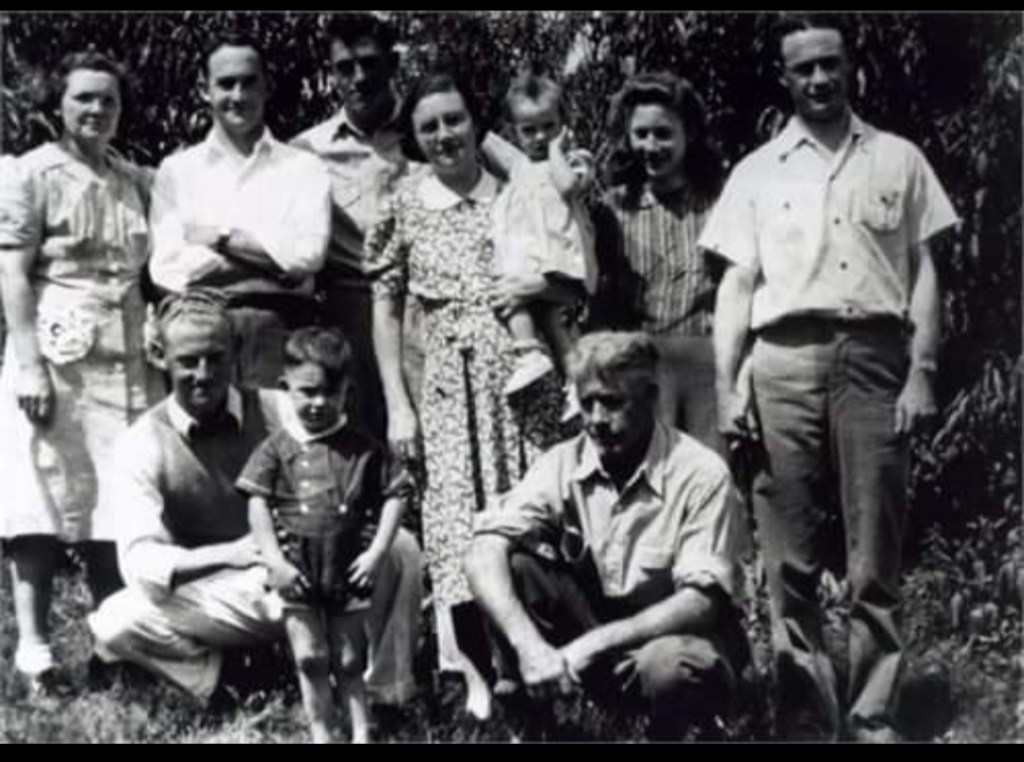
We were recently contacted by Stephen C. Mullins, son of the radio operator, Sgt. Clyde Mullins, who was on the B-17 that crashed near P’ville. You can read more about the crash here and here. And here is a local TV report on the dedication of the monument to the airmen.
Scroll down to read how Stephen’s father remembered that day.

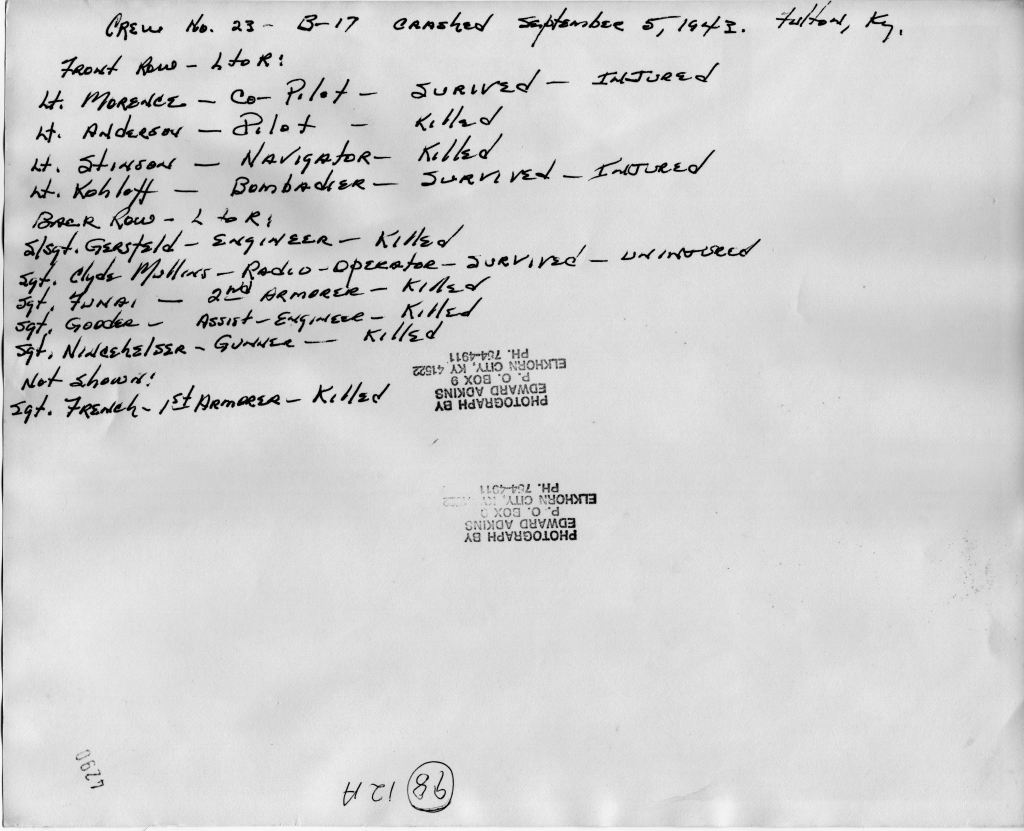
Stephen provided a the above high-quality photo of the crew with notes his father made about the disposition of each man:
Front Row – L to R:
Back Row L to R
not shown:
Here is what Stephen wrote:
Dad’s account of what happened went like this: The B-17 was in a bad storm. The pilot told the aircrew to get in their egress positions throughout the aircraft, in case they needed to bailout.
The pilot gave-up on trying to fly through the storm, and began circling and trying to climb above the storm. Dad (the radio operator) and the bombadier’s egress position was to lay in the bomb bay. In the event they needed to evacuate the plane, the copilot would open the bomb bay doors, and those two would fall out.
Also in the bomb bay were crates of ammunition and other supplies. As they tried to climb out of the storm, the plane suddenly went into a steep dive. Although the crates in the bomb bay were strapped down, they began to shift and were crushing against dad so hard, he could feel himself starting to pass-out. The sensation of blacking-out seemed so strange to him, he began trying to clinch his fists shut, but couldn’t do so before he went unconscious.
He regained consciousness in midair, and had enough wits about him to pull his ripcord. He remembered floating overtop of a farmhouse, where a lady, with a baby on her hip, was gathering laundry off the clothesline, before the impending storm.
In hearings about the crash, the copilot testified he never opened the bomb bay doors, suggesting the plane may have broken in half near the bomb bay—the likely reason dad and the bombadier got out of the plane.
Filmed Dec 13, 2021, this video shows damage from the EF-3 tornado that struck.
Courtesy of Weakley County History. Many thanks to Robert Reynolds.
See our other post on the Flying Fortress crash.
Video Courtesy of Weakley County History. Many thanks to Robert Reynolds
Sent by a visitor to our site:
Hello, Palmersville Historical Society. My name is Kevin Brewer. I am a history teacher in Big Sandy.
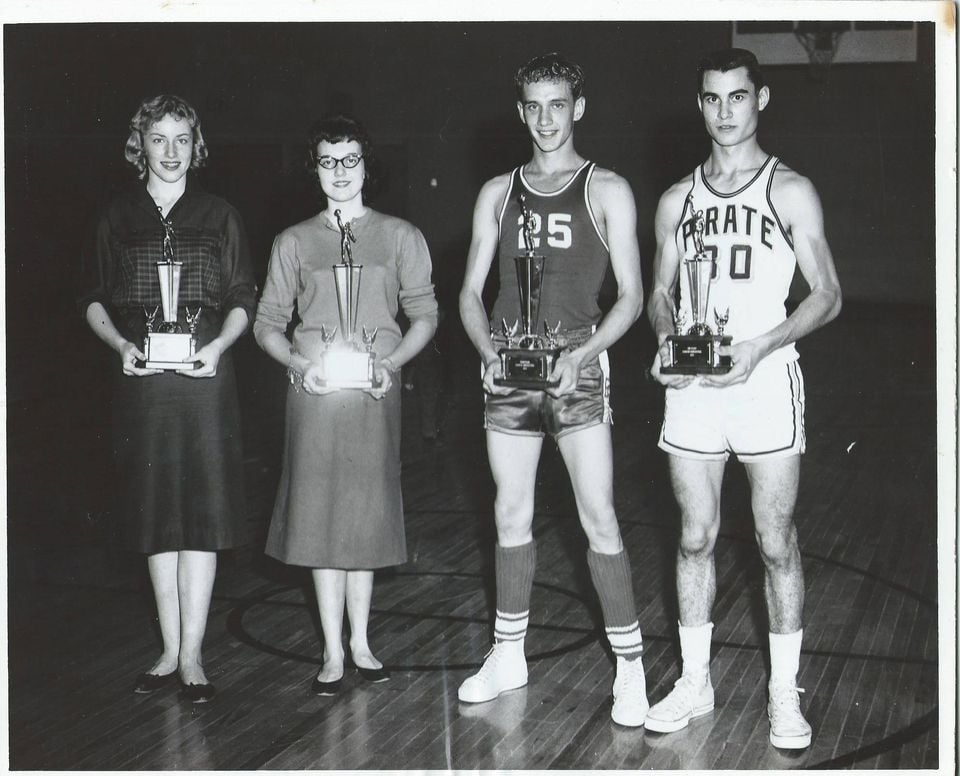
I have here a photograph of my father, J. T. Brewer (second from the right), who died in 2001, representing Big Sandy High School in a basketball tournament award ceremony in 1960.
I am told by my uncle that the player to his right, in the “Pirate” jersey, is a Larry Rawls of Palmersville. [a reader corrected this informatoin — it’s Jerry Rawls]
I thought it might be interesting to see if anyone in Palmersville recognizes him or either of the young women.
Do you recognize the others in the picture?
A good overview of the area; recorded in the summer 2022.
Courtesy of Weakly County History. Many thanks to Robert Reynolds.
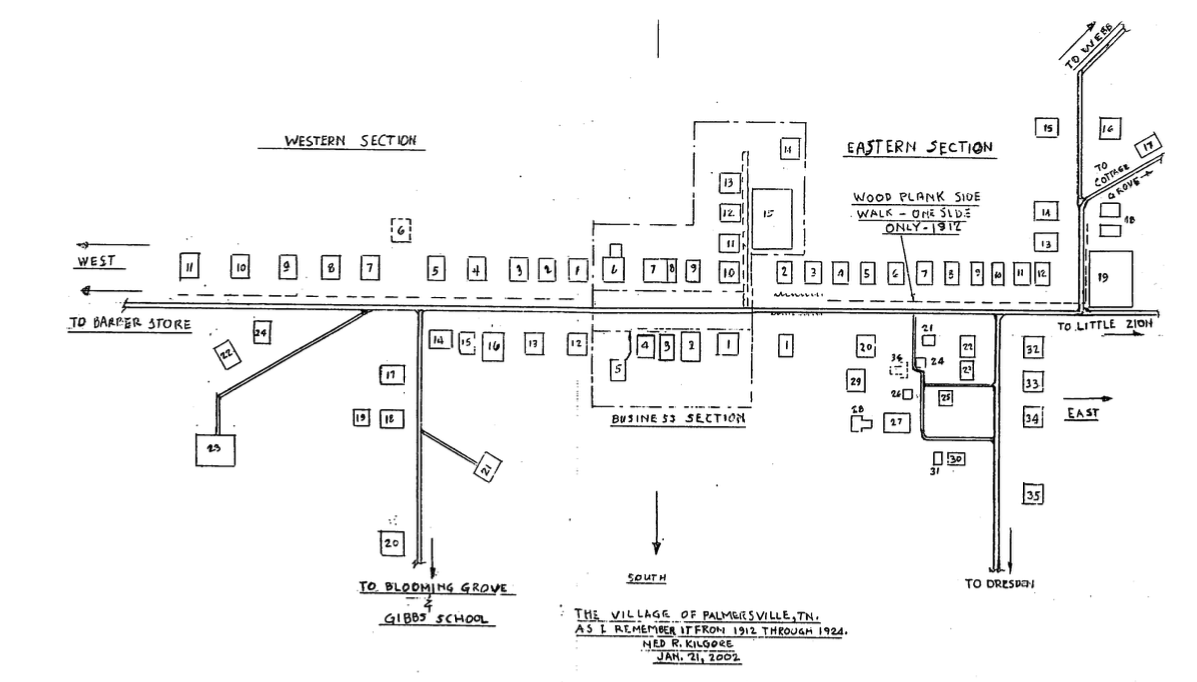
Ned R Kilgore drew this map in January 2002, based on his memories of town.
Click on the image to see a larger version. Download the map and legend using the link below.