Historic Lochridge Mill Served the Latham–Palmersville Community.
By the closing years of the 1800s, long before paved highways and modern farm equipment reached rural Weakley County, one of the most important gathering places between Latham and Palmersville was the old Lochridge Mill, sometimes referred to historically as Lockridge Mill.
Situated along the North Fork of the Obion River (before the new river was dug in 1910-1912) in the countryside east of Latham, the mill served generations of farm families during the late 1800s and early 1900s.
More than simply a place to grind corn and grain, Lochridge Mill stood at the center of rural life. In an era when nearly every family depended on farming, local gristmills were essential.
Farmers hauled wagonloads of corn and wheat to be ground into meal and flour, often waiting their turn while exchanging news, discussing crops, and visiting with neighbors. Like many Tennessee mills of the period, Lochridge Mill became both an economic and social hub for the surrounding countryside.
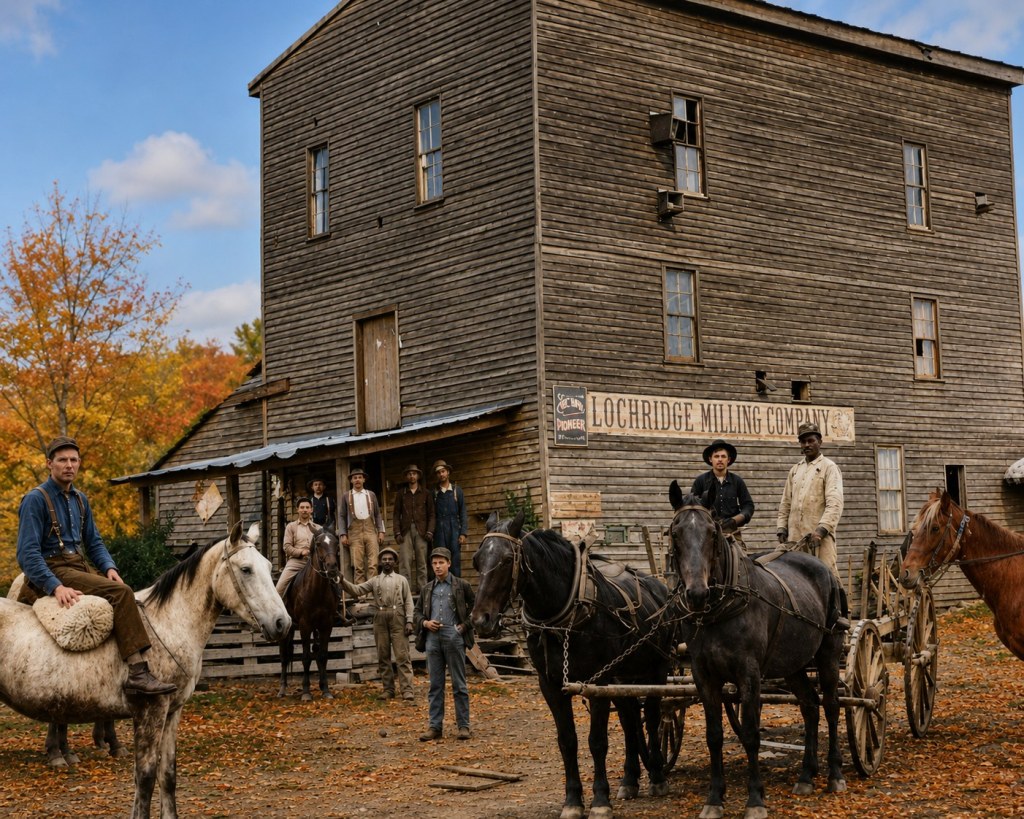
A rare early photograph from around 1900 shows the Lochridge Grist Mill east of Latham, with local resident Les Carney seen horseback (man on horse to the left) near the structure, offering a valuable glimpse into community life during the mill’s operating years.
The mill’s history reaches even further back into the 19th century. During the turbulent days of the Civil War, the location became known across the region through the Skirmish at Lockridge Mill, fought in May 1862 near the ford and mill owned by Marshall Lochridge. Confederate cavalry surprised Union troops near the crossing, making the mill site a small but notable battlefield in Weakley County history. The encounter left the Lockridge Mill name permanently tied to local historical memory.
Following the war, Lochridge Mill continued serving agricultural families as Weakley County rebuilt and prospered. The North Fork of the Obion River provided the waterpower that turned the millstones, a dependable source of energy before electricity and gasoline engines became common.
Mills such as Lochridge helped sustain isolated farming communities where travel to larger towns could take hours by wagon. Weakley County’s agricultural economy during the 19th century relied heavily upon such locally powered industries.
By the early 20th century, however, rural life began changing.
Steam-powered and later gasoline-powered mills, improved roads, and larger commercial operations gradually reduced the need for small water-powered gristmills. Communities like Latham evolved, and many of the old mills slowly disappeared from the landscape. Nearby Latham itself once supported mills and businesses that served the farming community, reflecting the importance of such enterprises in local development.
Today, Lochridge Mill no longer stands as it once did beside the waters of the Obion, yet its legacy remains an important chapter of Weakley County history. For many families between Latham and Palmersville, the old mill represented hard work, self-sufficiency, and neighborly fellowship — a reminder of a time when the turning of a waterwheel helped sustain an entire rural community.
Colorized historic mill photograph by Weakley County History
Information compiled by Robert G Reynolds of Weakely County History

