Here is another picture of students at the old school building, this from about 1935. Do you recognize anyone?
(click on the picture for a larger view)

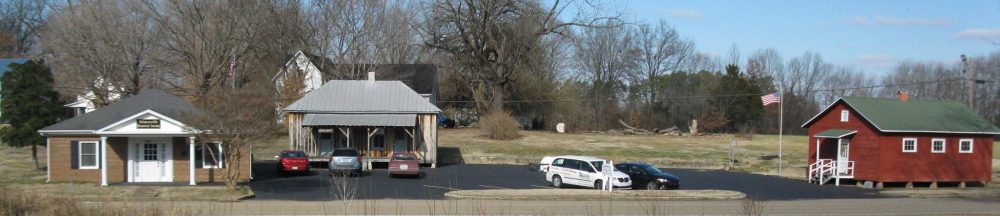
Here is another picture of students at the old school building, this from about 1935. Do you recognize anyone?
(click on the picture for a larger view)
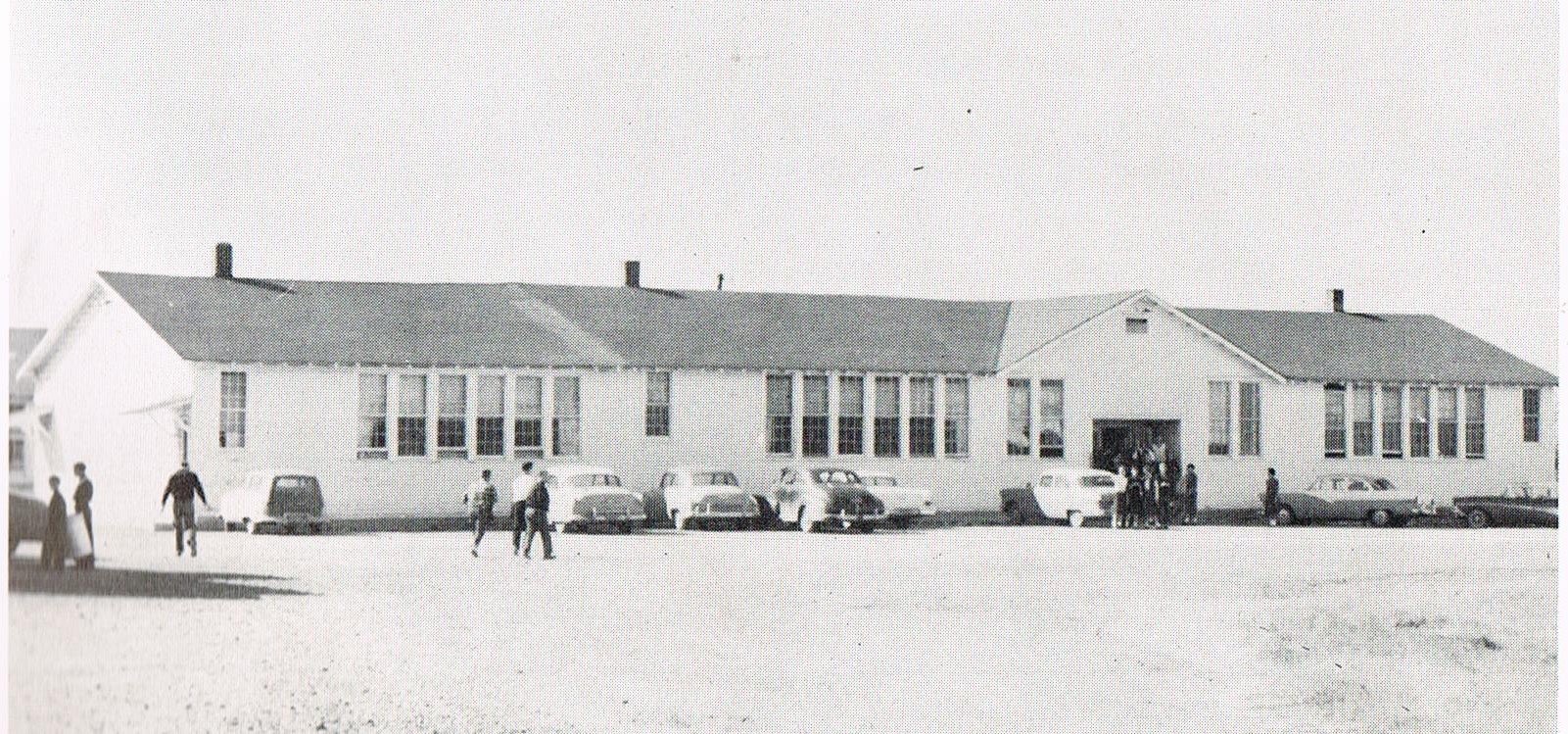
Here is the Palmersville school in 1961. Many good folks have many good memories of this place.
Thanks to the PalmersvilleTN Blog and RWB of Spring Hill, Tennessee for the photo.
by Ben Cantrell
NELL AND WILLIAM FAULKNER
Jim Cantrell’s “mule story” in the last edition of the PHS newsletter reminded me of another story of ours that illustrates the peculiar nature of mules.
First, let me tell you how William Faulkner got into this narrative. In his 1962 novel, The Rievers, one of the characters is a mule that loves sardines. He can outrun any other mule if he thinks a sardine treat awaits him at the finish line; otherwise, like mules in general, he cannot be commanded to run anywhere in a straight line. He dies–unbeaten–at age twenty-two.
In explaining how exceptional that particular mule is, Faulkner reckons that in general, a mule is second only to a rat as the most intelligent animal on the planet. The rat comes in first because it lives with you and eats your food without making any contribution of his own, while a mule can be persuaded to work, but only within his own self-set limits. In summing up what makes a mule so unique, Faulkner says:
“He will not permit himself to eat too much. He will draw a wagon or a plow, but he will not run a race. He will not try to jump anything he does not indubitably know beforehand he can jump; he will not enter any place unless he knows of his own knowledge what is on the other side; he will work for you patiently for ten years for the chance to kick you once.”
–The Rievers, Vintage Books Edition, p. 123
Well, I already knew a lot of that, just from growing up in the country. Brother Bob always said a mule won’t get into a spot where he might get hurt. He’s too smart for that. And mules have many talents that they don’t want you to notice except as they are pleased to reveal them. That’s where Nell enters the story.
Nell was half of a team of female mules that worked on our farm. In the course of time, her team-mate Old Ader became lame in her left hind leg, making her limp badly when she walked on hard ground. So Dad sold Old Ader to a neighbor who used her mainly to plow gardens, where she did fairly well.
That left Nell without a team-mate; her only companions were the log horses that worked in the woods. And Nell didn’t like solitude. She went wherever the horses went.
One day, the log team was driven to the woods in the Cane Creek bottom about three miles away, up close to Little Zion. Dad told us to keep Nell in her stall until the horses were out of sight. He thought she would be all right then.
But Nell was not fooled. She began pawing at her stall door as soon as she knew what was going on. She kept up a fuss, braying and snorting until we thought the team was far enough away. Since we thought the coast was clear, we opened her stall door. She bolted out, looking wild, and set out to find her companions. First, she ran down to the sawmill, but the wire gap was closed so she couldn’t get out on the road. Then, she ran back up the fence until she decided she had wasted enough time, so she simply jumped the fence as gracefully as a deer.
Then she ran up the road toward Palmersville, with her nose to the ground, like a bloodhound. When she reached the crossroads, she had three choices: straight, left, or right. But she never hesitated. She rounded the corner to her left at a full gallop and sped up past the Church of Christ, over the hill and past the cemetery (never doubting that she was on the right track). She crossed the Cub Branch in record time and finally caught up with the horses at about the Mount Pentecost Place, where she fell into stride alongside the team and went on to the woods with them.
The rest of the day, Nell never let the horses out of her sight. Each trip the horses made to snake a log out to the loading area, Nell went with them. When they rested, so did she; when they were watered at a big spring nearby, she drank with them. She didn’t get in the way; she was too smart for that–but she was never far away.
So, I already knew a lot about what Faulkner described in his book. I realized that Nell could have been anything she wished. She could have been a great coon hunter, but I suspect she thought running through the woods at night, trying to run another animal up a tree was ridiculous. She could have been a great steeplechase runner too, but, to her, jumping over hedges might have seemed too dangerous since she could not see what was on the other side. She was content just to be a mule until circumstances demanded that she use her extraordinary talents to accomplish something that she wanted to do.
Moral of the story: Never underestimate a mule!
Ben’s challenge: “This story is not unique; I’ll bet that all of you who grew up in the country have a “mule story” of your own. Send them in and we’ll create a mule library at the Palmersville Historical Society.”
After the passing of Ms. Lucille, I was questioned about whether the correct spelling of her maiden name was Grubb or Grubbs. In early census record, the name is usually spelled Grub or Grubb. Over the years it evolved into Grubbs.
Although some families use the early spelling and some choose to use the latter, most in this area are descendants of William Debarron Grubb (1811-1895) and his wife Nancy Dodd (1807-1877), both born in Virginia. They migrated to Tennessee about 1848, traveling by oxcart with their five children who were also born in Virginia.
(1) Mary Susan (1838-1856) who married a Mr. Eaves.
No further information on Mary.
(2) Jemima C. (1840-1930) who married William D. Adkins (1831-1907) in Weakley county in 1857.
From family history–Jemima is remembered as being a small woman who always wore a black dress and black bonnet. She was buried in a black dress and bonnet alongside her husband at the Grubb family cemetery. According to 1900 census, they had no children.
(3) Elizabeth Ann (1842-1900) who married Asa Clifford Matheny (1835-1898) in Weakley County in 1869.
The second wife of Asa, they were parents of sons Beverly, James, Henry, and daughter Nancy. Asa’s children by first wife Katheryn Johnson-William, Susan, Lucy and Obe. Elizabeth and Asa are buried at Concord Cemetery near Latham.
(4) Benjamin Alfred (1843-1923) who married Susan Martha Tucker (1852-1918) in Weakley County in 1868.
Benjamin A. Grubb was a Pvt. Co H, 33 Inf. Regt. in Confederate Army during War Between the States and fought in Battles of Shiloh, Perryville, KY and Chattanooga.
Benjamin Alfred and Susan were parents of ten children: James; Nancy Elizabeth who married W. L. Howard; Joseph; Benjamin Silas who married America Valera May Bowlin; William; Valeria C. who married Tobe Bowlin; Cynthia; Edna who married Mr. Thomas; Neal Lester who married Lula Mae Eaves; and Susan Annie who married J. C. Glasgow.
(5) Edward H. (1846-1898) who married Delaware (maiden name unknown) (1847-1901)
Edward and Delaware were parents of six known children: Susan Adeline; Robert L; Mary Ann; Alfred W.; Albert H; and Edwin Coleman who married Maggie Lee Wilson in Weakley County in 1898.
Edward and Delaware Grubb are buried at Grubb family cemetery.
Edwin Coleman (1879-1967) and Maggie Lee (1882-1969) Grubb were parents of Ela Flois who married Tobe Mansfield; Claud who married Alta Watts; Seymore; Reubin who married Estelle Puckett; Lucille Delaware who married Riley Rainbolt; and L. C. who married 1st Clinton Caldwell,and married 2nd Hubert Puckett. She is the only surviving child.
Edwin C. and Maggie Lee Grubb are buried at Matheny Grove Cemetery.
(Note: Although family records state that many of the early burials were at the Grubb family cemetery, it’s location could not be determined. As some of these family members do have head-stones at Thompson Cemetery on Boydsville Road, it is likely they are the same.)
According to family history, Debarron and Nancy’s journey from Virginia to Tennessee took six weeks. The family settled on the Boydsville Road probably in or near the Fancy community.
The sixth child of Debarron and Nancy Grubb, Sarah Jane Grubb (1848-1918) was born after the family arrived in Tennessee. She married William A. Thompson (1839-1910) in 1866. They are buried in Thompson Cemetery.
Sarah Jane and William A. Thompson were parents of sons Benjamin A. and Albert S. (Burke) and a daughter Nancy A. who married Edmund A. Stow.
William A. Thompson was a Confederate soldier; he also served four terms as sheriff of Weakley County.
Nancy and Ed Stow were parents of Annie Laura; William Monroe (Buck); Sarah Patience; Lydia; Susan Ethlene;
Pearl Irene; and a child who died in infancy.
Debarron Grubb, known as “the Ole Dutchman,” and his wife were buried in the Grubb family cemetery.
Debarron Grubb was postmaster of the Black Oak post office from October 17, 1855 until September 22, 1866. Black Oak is one of three post offices listed in the 5th District in the 1860 census record, the other two were Elm Tree and Boydsville. (The Palmers Store post office was discontinued in January 1855 and was reinstated in July of 1874 as Palmersville).
Historians and genealogists have tried for years to pinpoint exactly where the “Black Oak” Post Office would have been, a query that may never be answered with authority. My personal belief is that it was somewhere between the Fancy community on the Boydsville Road and the crossroads where the Boydsville Road meets the Latham/ Palmersville Road.
The Boydsville Road beginning at Boydsville on the Kentucky/Tennessee state line and continuing through Sprouts Levee to Dresden is one of the oldest roads in Weakley County and is still widely traveled.
Compiled Information from Weakley County History & Families, Pansy Baker, Census Records, Cemetery Records, Tennessee Marriage Records; Various Family Trees on Ancestry, Debarron Grubb Family Bible Extracts, Tennessee Postmasters, and personal research.
Nelda Rachels, one of the Historical Society’s board members, is encouraging communication by actually picking up a pen and writing a card to our friends and families occasionally instead of sending emails and texts.
She has provided postal cards depicting the Switchboard House, the Webb School House Museum, the Palmersville Lodge/Church Building, and the main building of the Historical Society. They are well done, in color, and can be purchased at our main building for 50 cents each. All proceeds go to the Historical Society.
Who knows, one day these might be collector items. Besides, what a great way to advertise Palmersville!
Sympathy is extended to families of those who have lost a loved one in the past few months.
Mrs. Shirley (Bowlin) Allison, Class of 1955, passed away October, 2016.
Mr. Charles Henry McWherter, Class of 1949, passed away October of last year. He is survived by a daughter Lisa Carol and a son Vic.
Mrs. Lucille (Grubbs) Rainbolt, one of the older citizens in Weakley County, passed away October 23, 2016 at the age of 104. She is survived by her children Billy Joe, Norma, and Anna. She was preceded in death by her husband Riley and her son Jerry Mack.
Ms. Lucille worked as a custodian at Palmersville School while in her 80s until the school closed. Afterward she worked at McDonald’s when in her 90s and held a second job cleaning a local office building.
Mrs. Jessie Lou (Rickman) Davis, who resided in the Austin Springs community most of her life before moving to Murray, KY, passed away on October 20, 2016 at age 92.
After moving to Murray, she volunteered for 23 years at the Murray-Calloway County Hospital. Mrs. Davis was preceded in death by her husband Cecil Davis; she is survived by her son Danny Davis.
What an inspiration these ladies should be to all of us.

click to see larger version
In the late fall of 1838, a group of over 1000 passed through Benton, Henry and Weakley counties–one part of a large scale forced migration known as the Trail of Tears. This particular group was led by Capt. John Benge, a Cherokee sub-chief, and was known as the Benge Detachment. Beginning in DeKalb County, AL and consisting of 959 Cherokee Indians, 144 black slaves, 60 wagons and 480 horses, the detachment made their way into Paris. They continued through Henry County toward the Little Zion community of Weakley County, then through Palmersville and headed toward Kentucky.
The group reached their destination in Oklahoma in January of 1839. Thirty-three deaths occurred during the trek; two of those being were buried in Weakley County.
For the past two years, Henry County Historian David Webb has worked with the National Park Service to obtain signs marking this historic trail. Henry County has received their signs and will likely have a dedication ceremony in the spring. It is the goal of Dr. Webb to have signage from Fort Payne, Alabama all across the trail in Tennessee. Signage is already in place at the Kentucky line.
Palmersville Historical Society has committed to this project and is currently working with the National Park Service to obtain the signage for marking the trail which passed through Palmersville.
The signs are provided by the Park Service, but posts, bolts, etc. and the installation itself will have to be provided locally.
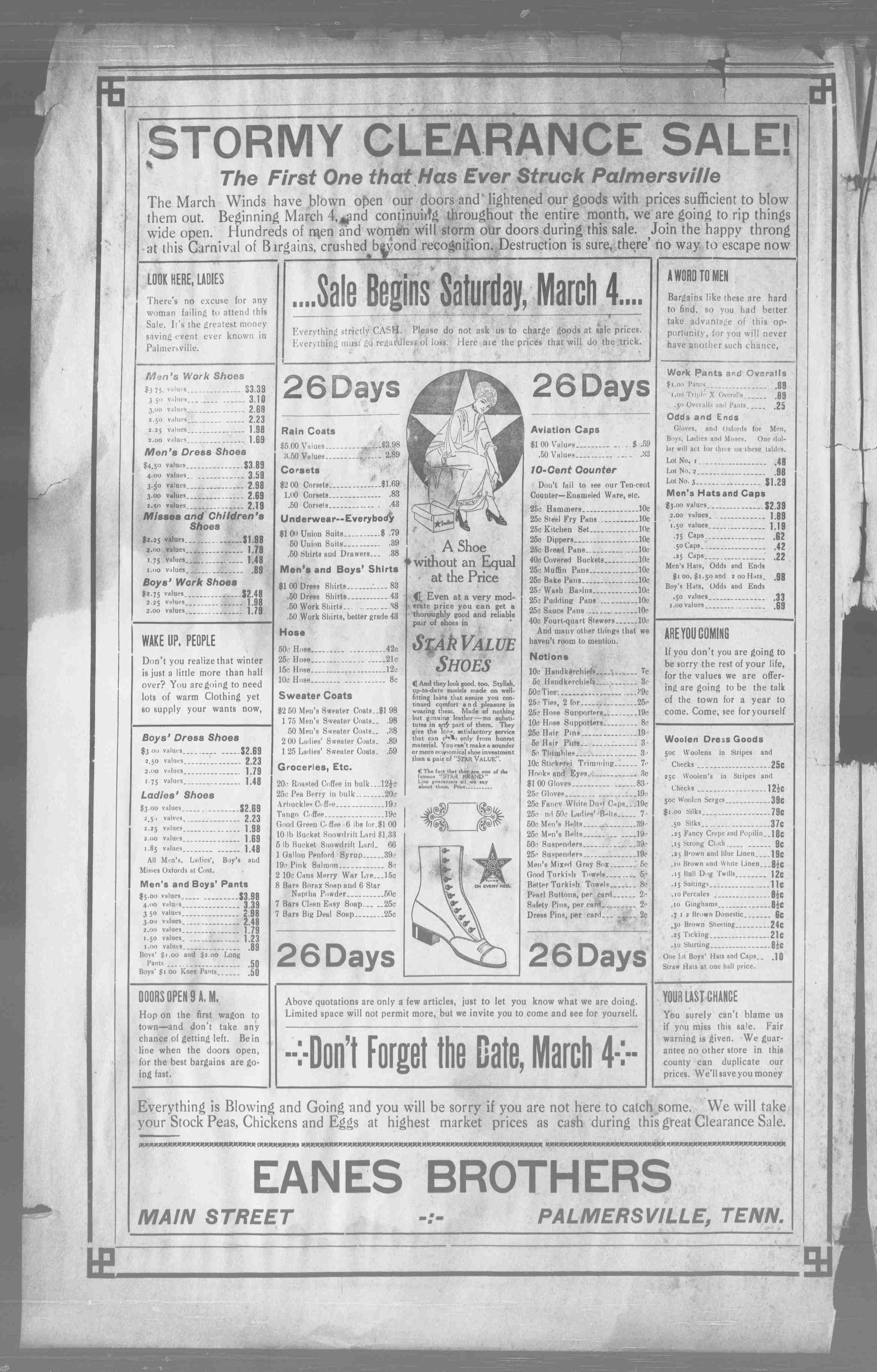
Here is an advertisement from March 4, 1920. The Eanes Brothers had a big sale on Main Street:
Another picture that crossed our desk recently —

These were a few of the buildings left standing after the big fire in 1924 that destroyed most of old Palmersville. This picture was taken looking East on the Latham highway.
Many thanks to Weakley County Remembered and Palmersville TNBlog.
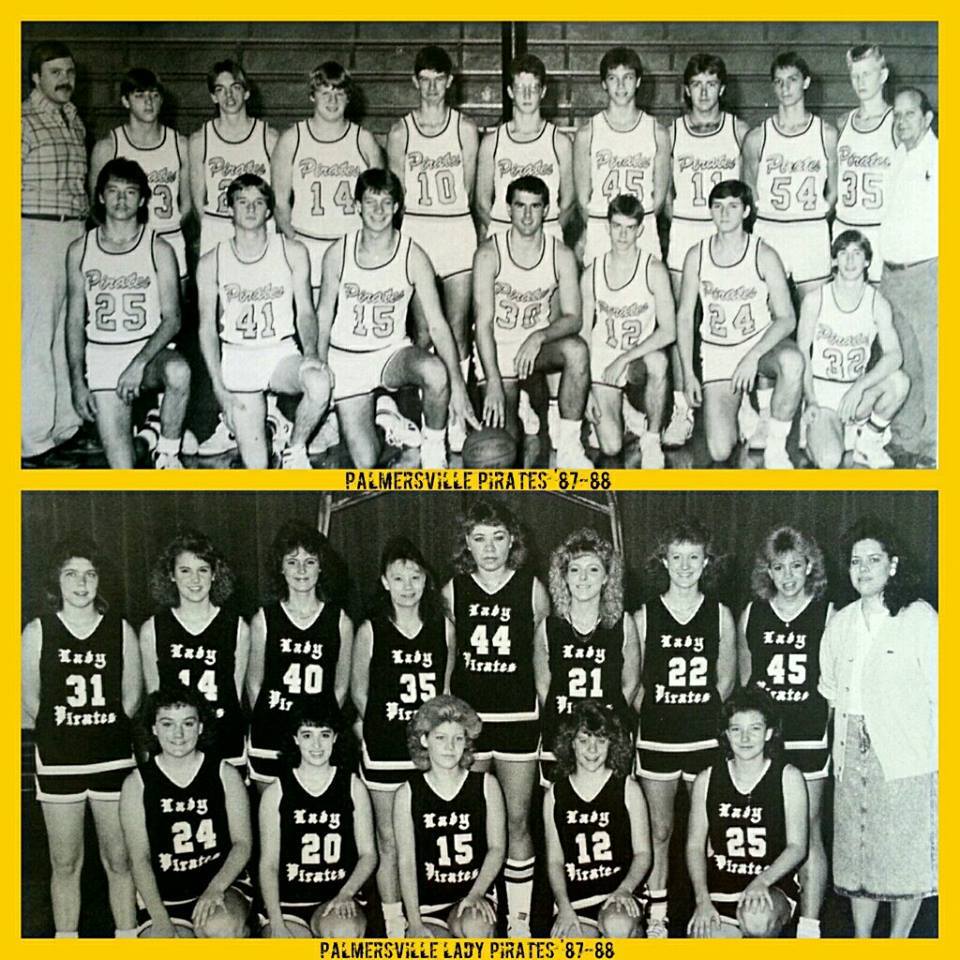
This picture crossed our desk recently: the 1987-88 Palmersville basketball teams.
Do you know the people in the picture? Let us know in the comments.
 Palmersville Historical Society